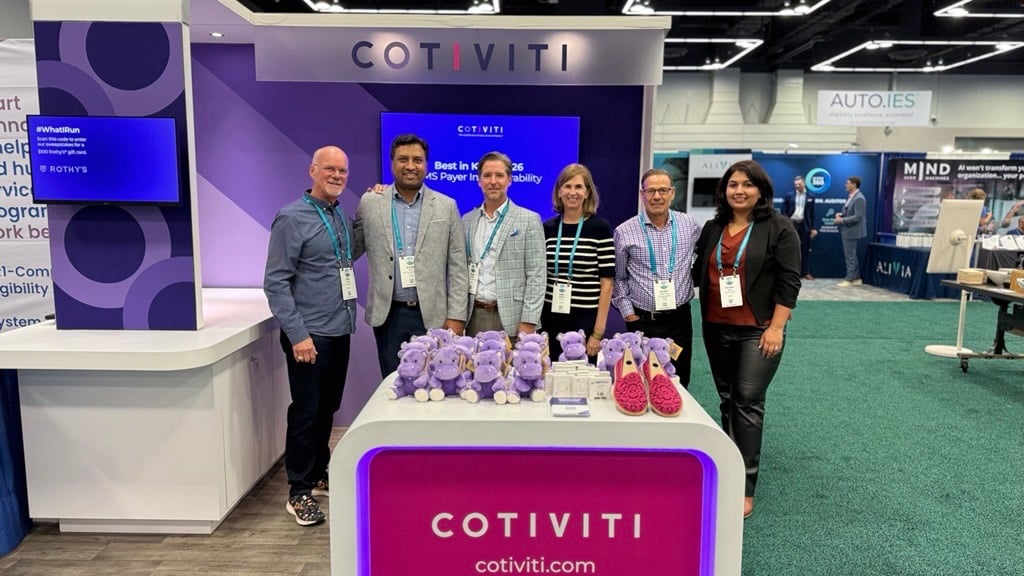
The annual Medicaid Enterprise Systems Conference (MESC) is one of the premier events for state Medicaid agencies. The discussions that take place during the conference offer valuable insight into what state agencies will focus on over the next year—and as we learned in Portland at MESC 2026, payment integrity and interoperability are at the top of the radar for Medicaid leaders.
Payment integrity and fraud, waste, and abuse
Earlier this year, the Centers for Medicare & Medicaid Services (CMS) requested that all state Medicaid programs “swiftly revalidate” Medicaid providers who are considered high-risk for fraud, waste, and abuse (FWA). This communication was soon followed by an announcement that the Medicaid Fraud Control Units (MFCUs) of every state are under review by the HHS Office of the Inspector General (HHS-OIG).
Since then, federal authorities have denied the state of Hawaii’s MFCU recertification and suspended funding for the MFCU for New York State through September, citing low rates of criminal convictions in favor of civil prosecution for Medicaid fraud. In short, payment integrity and FWA are under a federal microscope, and state Medicaid agencies are working hard to weather this increased regulatory scrutiny.
To comply with these mandates and protect program integrity, Medicaid plans are looking to both pre and postpay FWA solutions that offer benefits such as cross-payer analysis, enabling them to look beyond their own claims data to identify aberrant billing patterns and other red flags.
Claims attachments
With the finalization of final rule CMS-0053-F, CMS has set a new baseline for HIPAA-compliant electronic exchange of clinical documentation. By formalizing X12 as the standard for administrative transaction data, HL7® standards for clinical data integration, and establishing electronic signature standards for transaction authentication, CMS-0053-F aims to streamline workflows and reduce administrative burdens for providers and payers.
Medicaid payers and providers have less than two years to implement the technology upgrades required by CMS-0053-F—specifically, version 6020 of the X12N 275 with HL7 C-CDA content and 277 transactions, as well as electronic signature requirements. Implementing these changes will ensure the requisite medical documentation arrives with the claim, which will in turn help improve first-pass approval rates and reduce follow-up requests.
CMS-0053-F is just the first step, albeit a crucial one; as such, state Medicaid agencies need to be prepared for a wave of technology upgrades and integrations being implemented between payers and providers as they seek to achieve true modernization, not just compliance.
Coordination of benefits (COB) and Medicaid redetermination
As Medicaid agencies continue navigating the impacts of post-pandemic eligibility redeterminations, maintaining accurate member coverage information has become a growing operational and financial challenge. Millions of beneficiaries have experienced coverage changes over the past several years, increasing the likelihood of outdated records, unidentified third-party coverage, and payment inaccuracies. As a result, coordination of benefits (COB) emerged as an area of increasing interest among state Medicaid leaders seeking to strengthen program integrity while improving member outcomes.
Prospective COB solutions help Medicaid agencies and managed care organizations identify other liable coverage sources, including commercial insurance, employer-sponsored plans, Medicare, TRICARE, and other third-party payers—before claims are paid. By leveraging near real-time coverage intelligence and cross-payer data sources, Medicaid programs can improve the accuracy of member eligibility and coverage records, ensuring Medicaid appropriately remains the payer of last resort.
What’s next?
State Medicaid agencies have to balance multiple priorities: enhancing program integrity, FWA, and third-party liability processes; adapting to new eligibility and enrollment policies; and modernizing systems to keep pace with an evolving technological landscape.
It's no surprise that many of our conversations at MESC 2026 revolved around these challenges. But with our suite of integrated, comprehensive solutions, Cotiviti is ready to help state Medicaid leaders, payers, and providers meet the moment.
Read our recent white paper by SVP of Payment Integrity Operations Erin Rutzler, A partnership driven approach to waste and abuse prevention, to learn how we collaborate with our clients to design an intentional FWA prevention strategy that drives results.